Germany Is Still Paying Churches for Something Napoleon Did
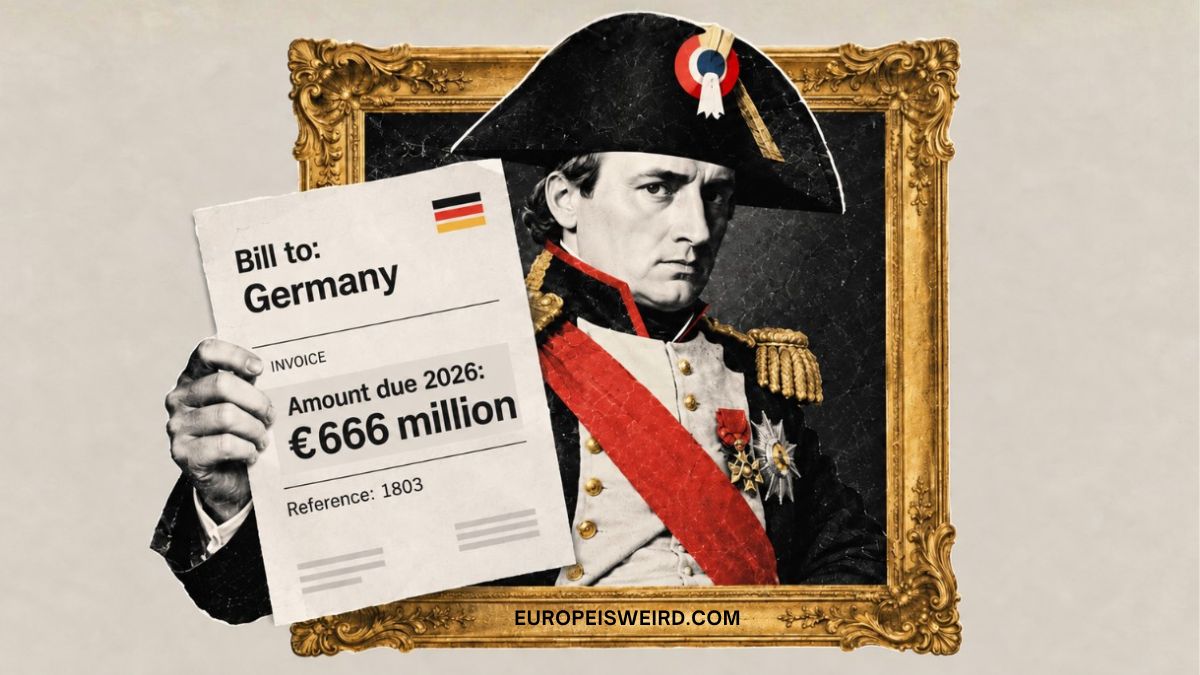
In 2026, German states are budgeting a record €666 million for historic payments to the Catholic and Protestant churches. The money is separate from church tax. Much of the obligation goes back to church property seized around 1803, during a land grab that Napoleon helped set in motion.
The bill keeps growing. Germany’s own constitution has required a way to settle it since 1919. Napoleon has been dead since 1821 and is, at this point, the least responsible person in this story.
What did Napoleon actually do?
He won. Repeatedly. By 1801, after years of getting beaten by France, the Holy Roman Empire had formally given up its territories on the left bank of the Rhine.
The German princes who lost land there wanted compensation, and France was obviously not about to hand anything back. So the solution was very European: somebody else would lose land instead.
A delegation met in Regensburg in 1802 to work out exactly who that somebody would be. Meanwhile, German princes and their envoys descended on Paris to lobby the French government, and some reportedly arrived with bribes.
Fair enough, really. If your new borders are being drawn in Napoleon's capital, you want to be friends with whoever is holding the pen.
The result was the settlement adopted in February 1803, officially called the Reichsdeputationshauptschluss. That is one word. It was heavily shaped by France and Russia, two countries that were not German but had very strong opinions about Germany.
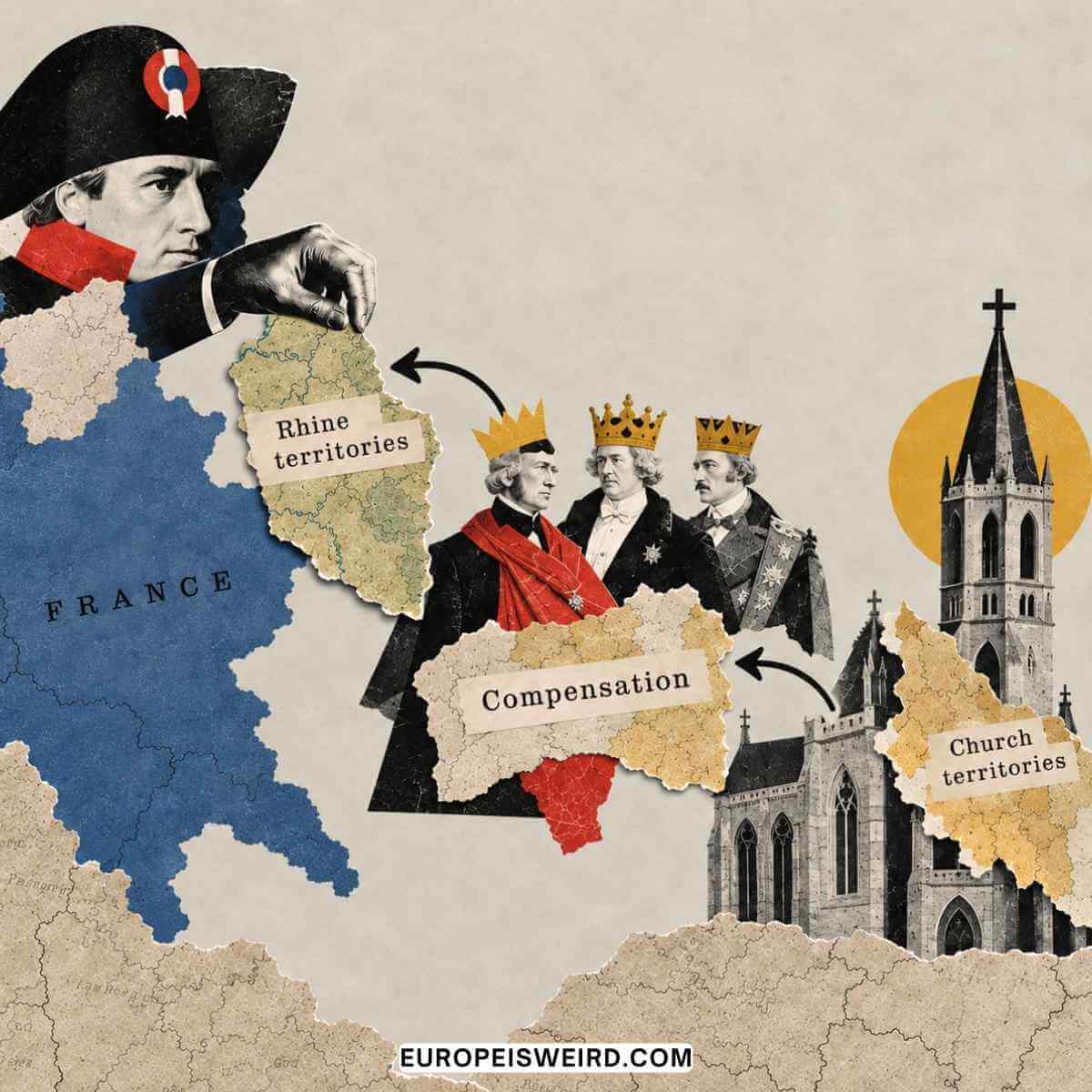
The deal was simple: France kept the princes’ land, and the princes took the Church’s. Several of them ended up with far more territory than they had lost, and losing a war has rarely paid this well.
At the time, some bishops were also heads of state, ruling their own territories with subjects, courts and taxes. So yes, your bishop could also be your government. Those states were first on the list.
Their lands passed to secular rulers, many abbeys and monasteries were dissolved, and the new owners got the property and the income. They also got the considerably less exciting obligation to keep supporting the churches and clergy they had just displaced.
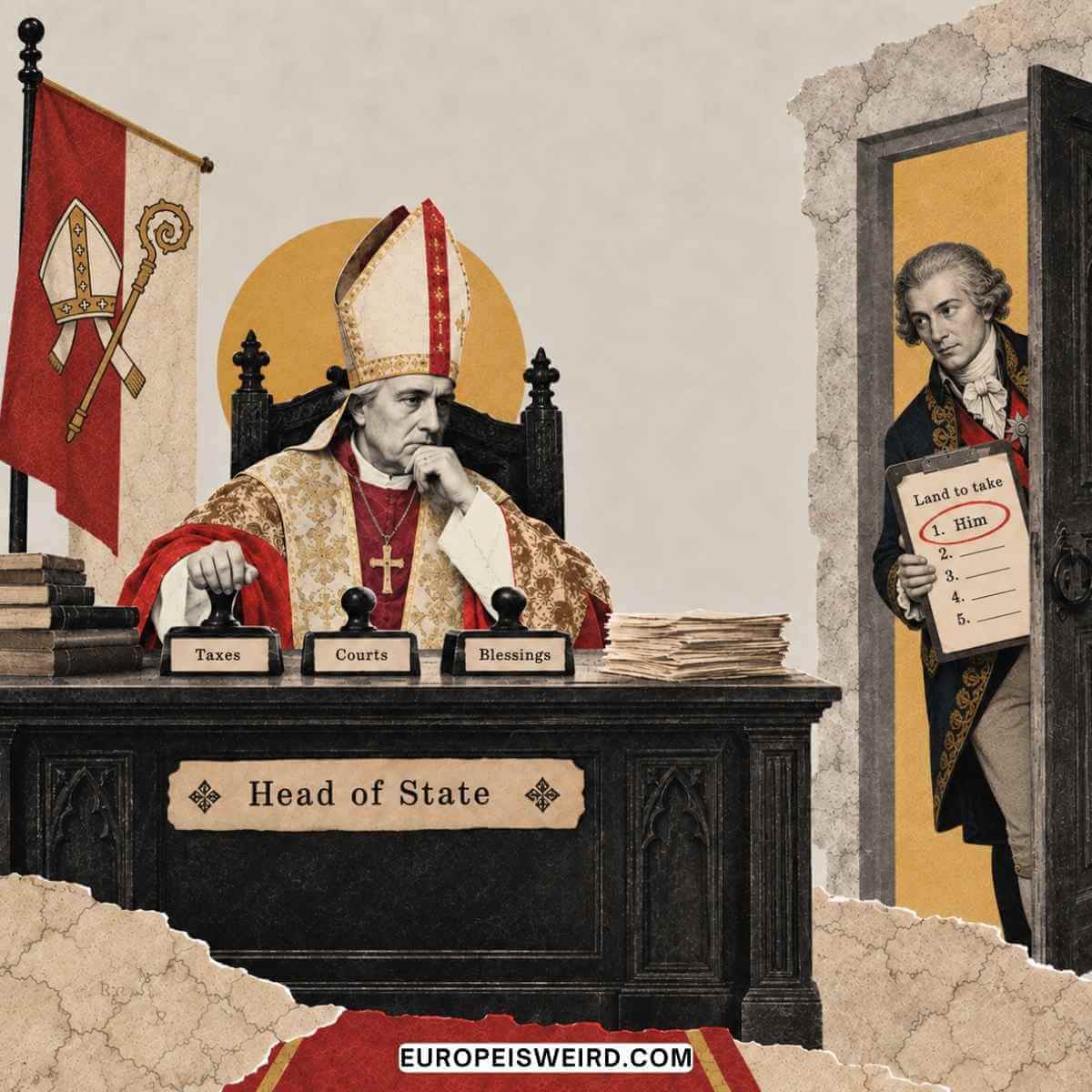
The severance packages were generous in a very specific way. Section 50 of the settlement promised departing church rulers free furnished housing for life, including tableware.
The most senior prince-bishops and prince-abbots also got a summer residence. You have lost your entire country, Your Grace, but please enjoy these forks.
Those personal perks disappeared with the people who received them. The payments Germany still makes today came out of this upheaval and other historic obligations, then survived through later laws and treaties.
The Holy Roman Empire itself lasted only three more years before dissolving in 1806. Its financial mess made it to the iPhone era.
Germany has been getting around to it since 1919
These payments are called Staatsleistungen, or "state payments," and ending them has been an official constitutional instruction for more than a century.
The Weimar Constitution of 1919 told the national government to set the rules for a settlement and the states to carry it out. The Weimar Republic then spent its short life dealing with hyperinflation, the Great Depression and the rise of the Nazis, so the church payments stayed at the bottom of the pile.
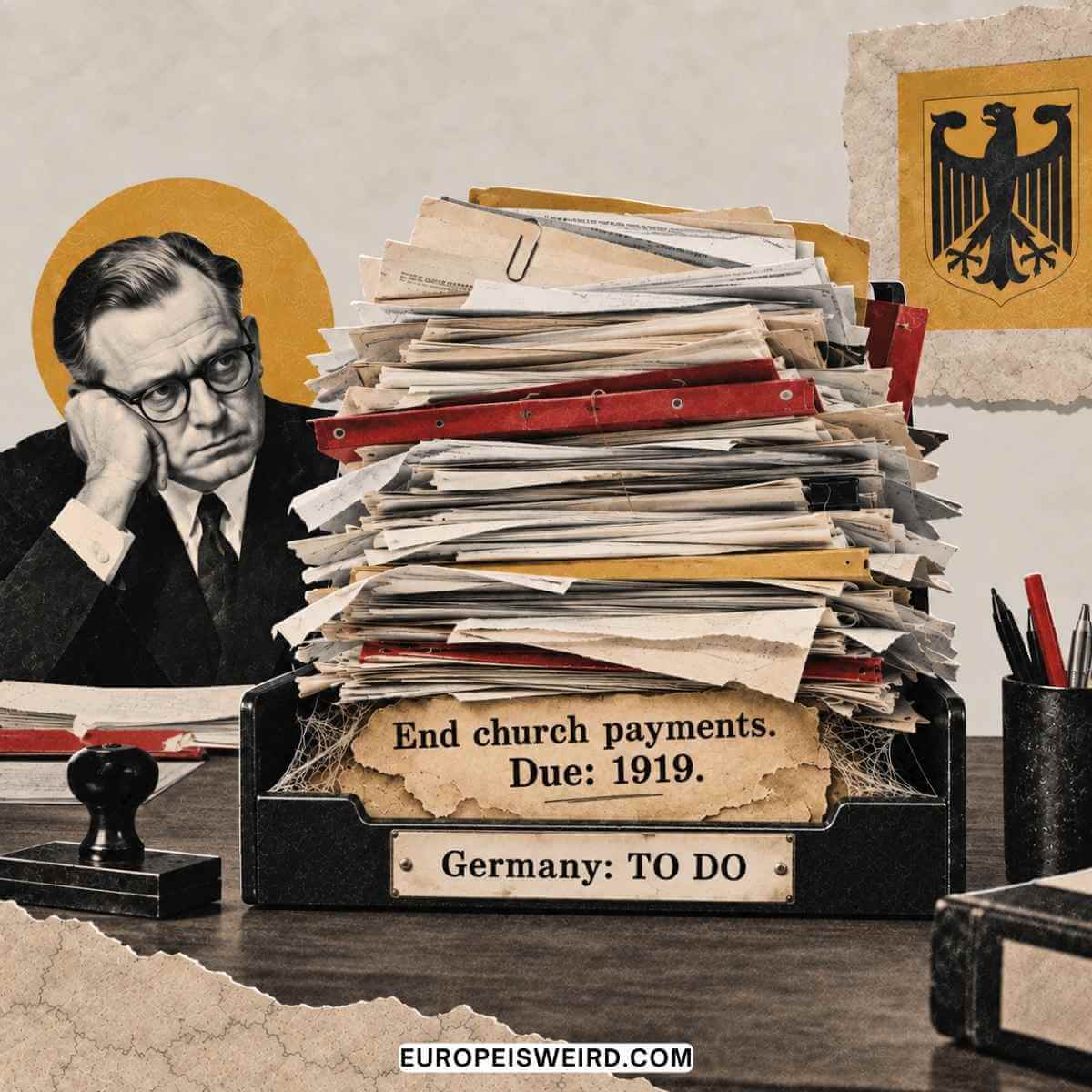
The Nazi regime didn't settle them either, but in 1933 it signed a treaty with the Vatican promising that the basic rules for buying out Catholic church payments would first be agreed with the Holy See. The Third Reich lasted 12 years. The treaty is still here.
When West Germany wrote its Basic Law in 1949, it did not bother starting from scratch. It simply copy-pasted the old Weimar articles on religion in through Article 140, so Germany's current constitution still contains homework assigned by a republic that collapsed in 1933.
The expensive part is one word: abgelöst. The constitution says the payments cannot simply stop; they have to be bought out with money or property. So Germany’s constitutional route to no longer paying the churches is, first, to pay the churches.
Until that deal exists, the payments remain legally due. A finance minister can’t just cancel them without violating the constitution over compensation tied to church property secularized while Napoleon was still alive.
What the constitution never included was a deadline. The coalition that took office in 2021 promised to finally set the rules, then collapsed in 2024 without doing it.
In 107 years, the instruction to end these payments has outlived the Weimar Republic, a dictatorship, a divided Germany and reunification. The payments have outlived all of them too, and they're currently doing better than ever.
Yes, the churches run hospitals. Different bill.
Before the comments section gets ideas: yes, churches do run hospitals, kindergartens and elderly care, on an enormous scale. The Catholic Caritas and Protestant Diakonie networks together employ well over a million people.
Those services have their own funding arrangements, including social insurance payments, fees, public subsidies and varying contributions from church funds and donations.
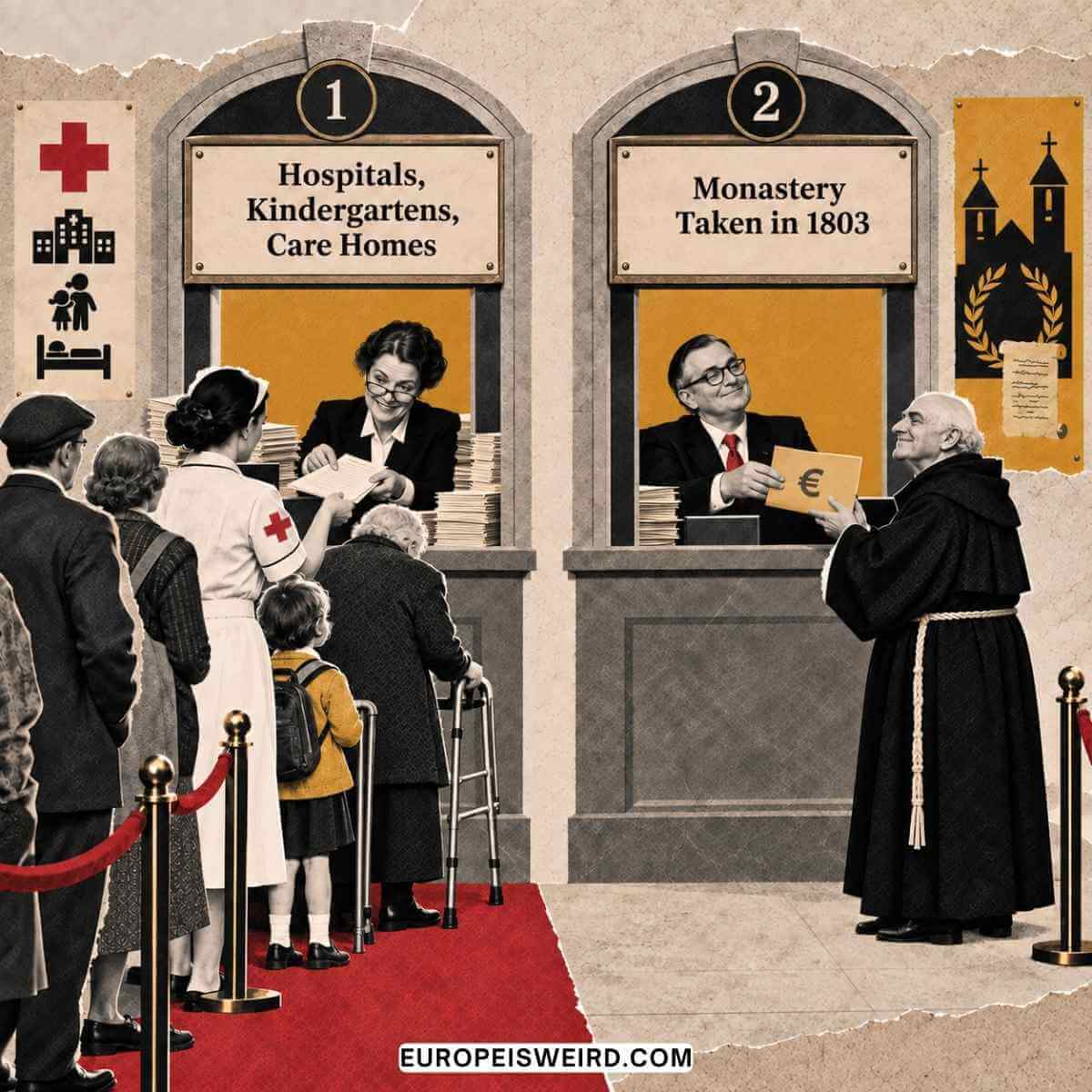
The historic payments are a different thing. Germany does not calculate them by counting hospital beds, kindergarten places or nursing-home residents. They exist because of old legal commitments.
Churches can, of course, use that money within their wider budgets, including community work. But “we run hospitals” is not the reason this bill exists.
One bill helps fund a care home. The other is still here because somebody took a monastery while Napoleon was alive.
Even Napoleon’s mess gets a pay rise
In many states, the payment agreements are tied to civil-service pay. The details vary, but the basic effect is that when German police officers, teachers and tax officials get a raise, the compensation linked to church property taken in 1803 can rise with them.
The churches themselves are not doing nearly as well. In 1990, more than 72 percent of people in Germany belonged to the Catholic Church or one of the Protestant EKD churches. By the end of 2025, that was down to 43.8 percent, which means most of the country now belongs to neither.

Leaving the church in Germany is an official process: you file a declaration, usually pay a fee, and stop paying church tax. What you do not stop paying is Staatsleistungen, because those come from the regular state budget.
In the 2026 budget figures compiled by the civil liberties group Humanistische Union, Protestant churches get about 396 million euros and Catholic churches about 270.5 million. Together that comes to roughly 666 million euros. An unfortunate total, branding-wise.
Fourteen of Germany's sixteen states pay. The exceptions are Bremen and Hamburg, so if you want to live somewhere in Germany where the state budget isn't covering damage from 1803, those are your two options.
There is an exit. It costs billions.
Germany could settle the obligations, pay the churches off and finally close the account. Then comes the small problem of the price, which is the exact point where every politician in Germany suddenly finds something else to do.
In 2020, the FDP, the Left and the Greens - three parties that rarely agree on anything - put forward a bill to finally set the rules. It proposed letting the states pay the churches up to 18.6 times their 2020 annual payments, in instalments if needed.
The number comes from Germany's valuation law, which already has a formula for putting a price on a payment that never ends, because of course Germany has a formula for that.
The governing CDU/CSU and SPD voted it down in May 2021. A few months later, the Greens and the FDP were in government themselves, promised to solve it, and then spent three years not passing their own idea.
Apply that multiplier to the 2026 total and the buyout comes to roughly 12.4 billion euros, for a settlement signed a year before the world's first steam locomotive made its first run. Any future deal could use different terms, but every increase in the annual payments would make getting rid of Napoleon a little more expensive.
The other problem is who pays. Parliament sets the rules, but the states have to find the money. At a Bundestag hearing in 2021, experts warned about the financial burden, and it's not hard to see why the states are in no rush to be handed a multibillion-euro bill written by someone else.
The churches, for their part, are open to a deal. The Protestant EKD says it welcomes an appropriate settlement, and thanks to that 1933 treaty, the Vatican would expect a say in the Catholic side of it. Nobody has yet agreed on what "appropriate" means in euros, so the annual transfers keep going out.
Meanwhile, Germany has already paid a fortune. The published figures show about €15.8 billion in transfers from 1990 through 2024 alone - more than the €12.4 billion hypothetical buyout. None of it counts toward the settlement.
Thirty-five years of transfers, and Germany's cancellation button is still behind a paywall.
The empire is gone, the bill is not
France, which helped create this mess, mostly got out of its own church arrangement long ago. After the Revolution seized church property, Napoleon’s 1801 concordat put Catholic clergy salaries on the state payroll, which is roughly the German arrangement with better wine. France's 1905 separation law ended that system across most of the country.
The exception in mainland France is Alsace and Moselle. They belonged to Germany in 1905 and missed the separation law entirely. Priests, pastors and rabbis there are still paid by the French state.
Napoleon lost at Waterloo in 1815. In budget negotiations, he is still undefeated.