
Monaco Keeps Making More Monaco Out of the Sea
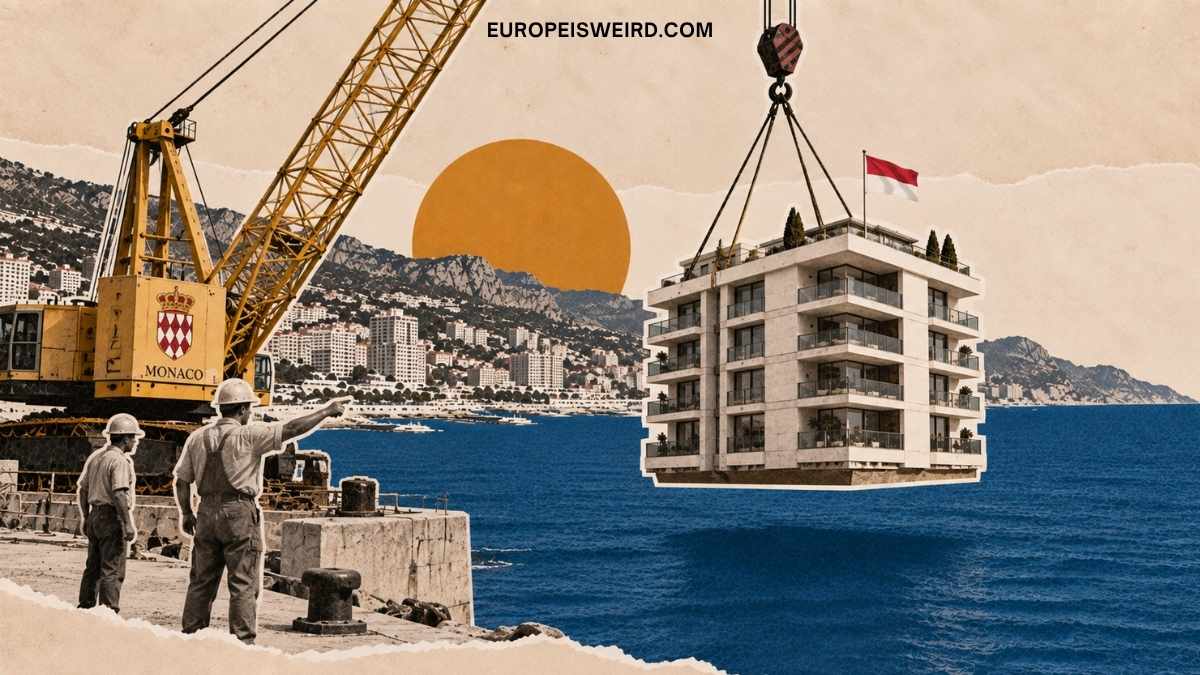
Monaco is smaller than Central Park and the most densely populated country on earth. If it wants more land, it has two directions it could grow in.
One is France, which also happens to be the country responsible for defending Monaco, so invading it would be awkward for everyone involved. The other is the Mediterranean, which can’t object.
So Monaco builds new land in the sea through a process called land reclamation. More than a fifth of the principality used to be water, and the newest piece, a six-hectare district called Mareterra, was inaugurated on December 4, 2024. The name means sea-land, which for once is not marketing.
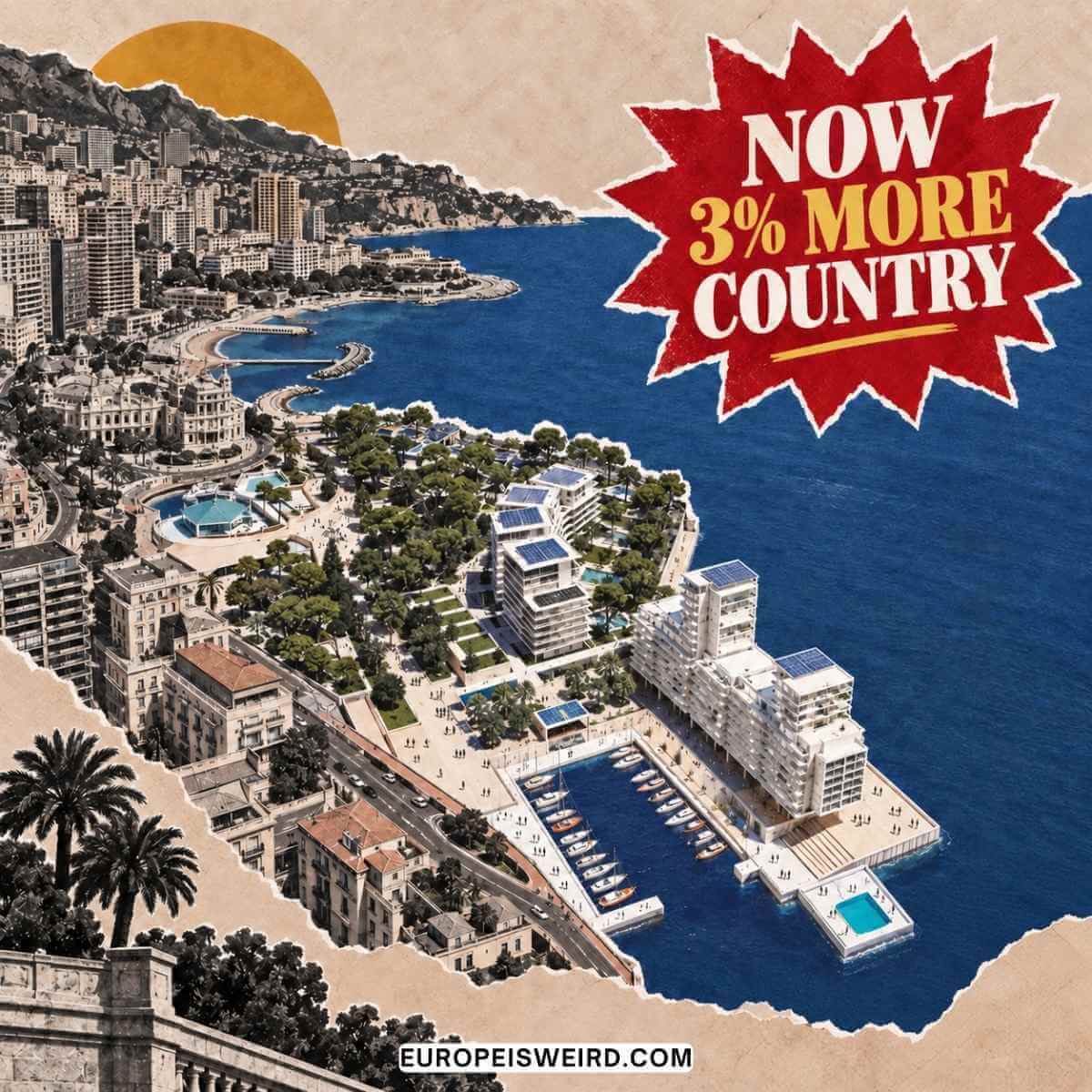
The €2 billion development made the entire country about 3% bigger.
How did Monaco get this small in the first place?
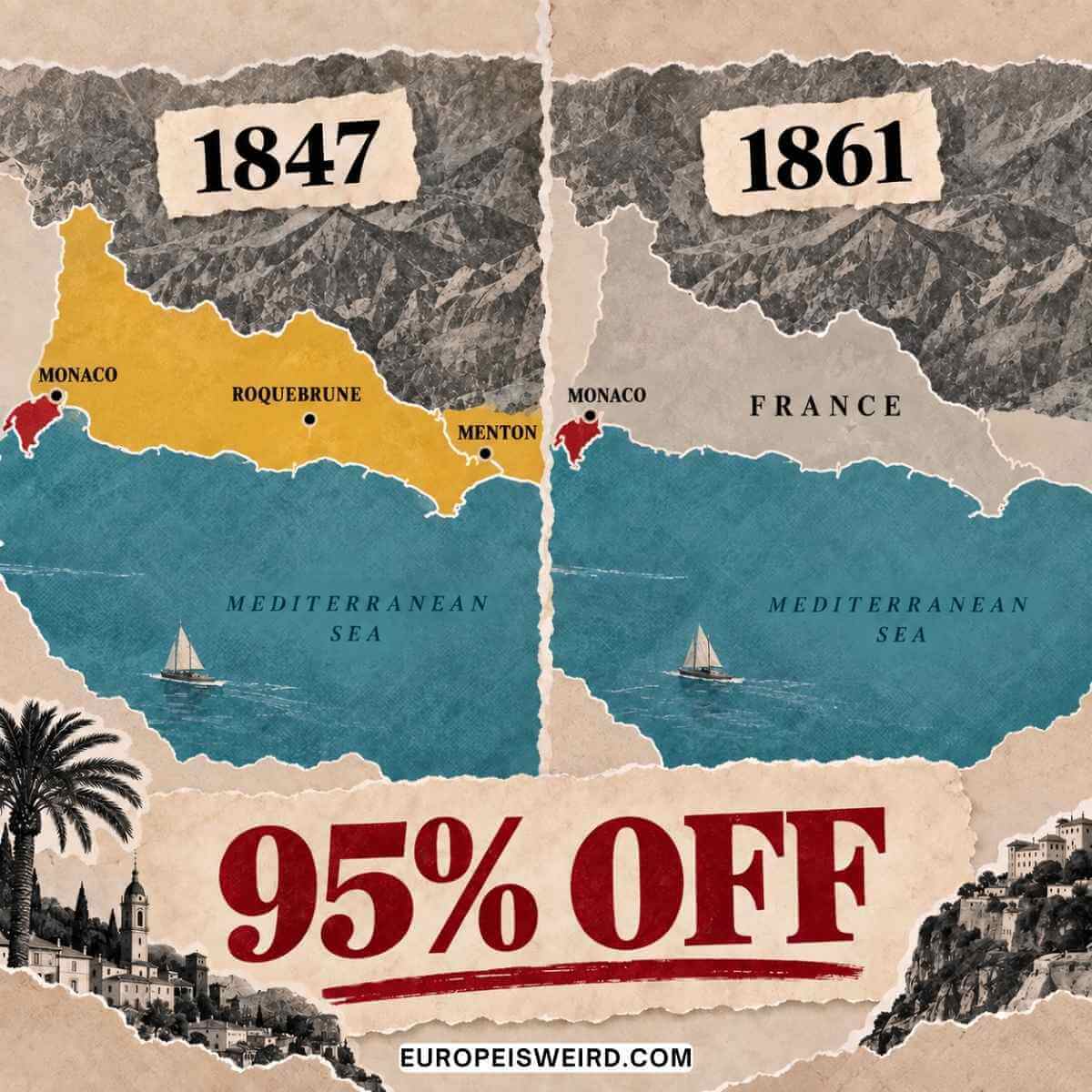
Until the mid-1800s, the Grimaldi family also ruled Menton and Roquebrune, which made up roughly 95% of their territory. In 1848, both towns rebelled against the Grimaldi taxes and declared themselves free.
In 1861 Prince Charles III officially signed them over to France in exchange for 4 million francs and French recognition of Monaco’s sovereignty. The prince, in other words, sold land he had already lost and came out of it with cash and a country.
The casino gamble was already underway. Monaco granted its first casino concession in 1856, and the company behind Monte Carlo was established in 1863.
The business eventually worked so well that Monaco abolished personal income tax in 1869. That is the thing Monaco is famous for, and it is why an absurdly expensive address can look like a bargain. Rich people have been trying to move into a country with nowhere to put them ever since.
Who decided the sea was available?
By the early 1900s, Monaco was already nudging its shoreline outward. The serious work came under Prince Rainier III, known at home as the Builder Prince and everywhere else as the man who married Grace Kelly.
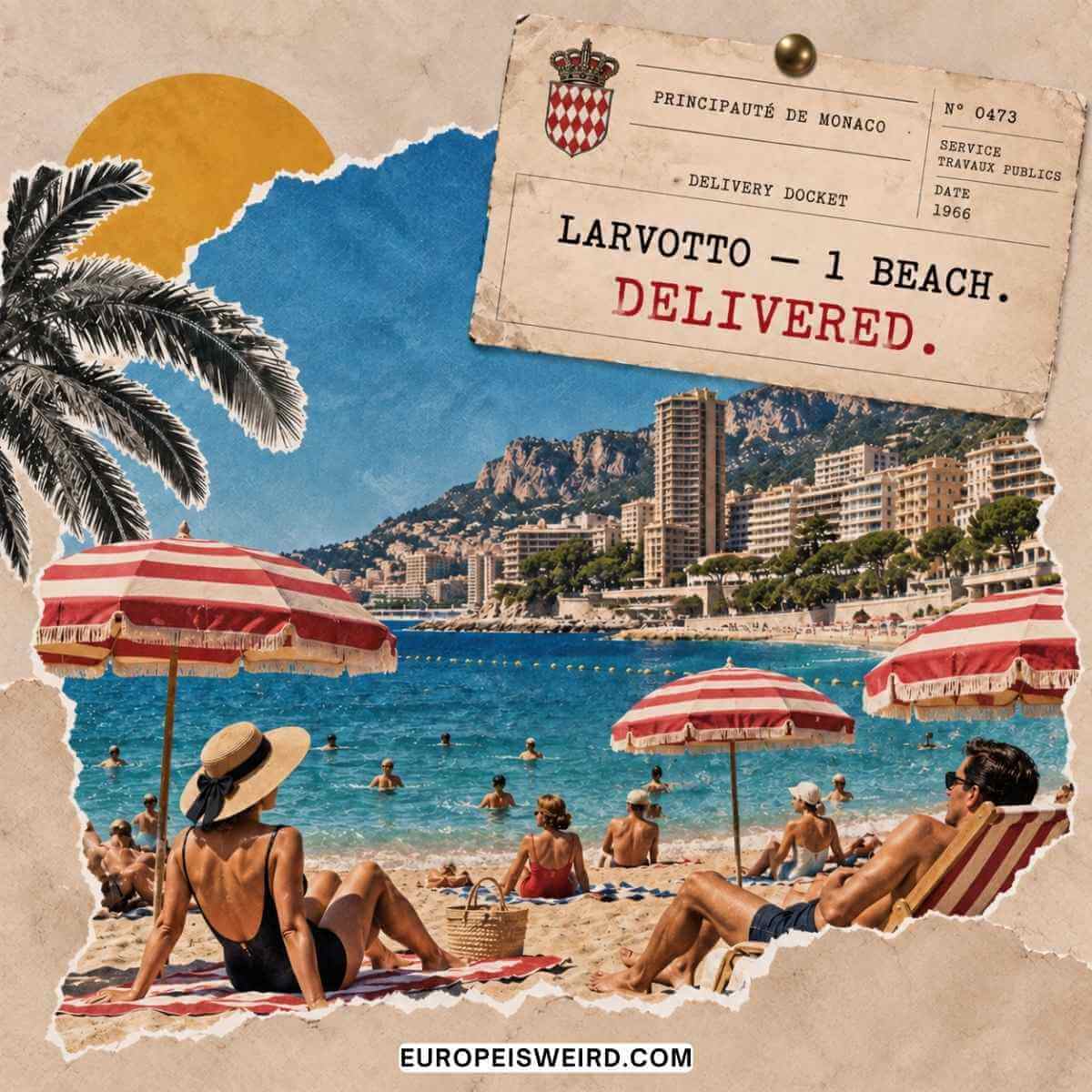
Between 1958 and 1961, the Portier extension added 35,000 square meters. In the 1960s came Larvotto’s artificial beach, which means a good share of Monaco’s sunbathing happens on a beach the government ordered.
Then came Fontvieille, the big one. The main reclamation works ran from 1966 to 1973, adding about 22 hectares. The buildings followed over the years: homes, offices, a marina, a heliport, and eventually the Stade Louis II, inaugurated in 1985.
AS Monaco plays there in the French league, on ground that was still underwater when Grace Kelly moved to Monaco.
That is what makes old photographs of Fontvieille so good. Where there was water, there are now apartment buildings and a soccer stadium. The before-and-after is also a national border update.
Wait, part of Monaco was built in Spain?
By the late 1990s, Monaco wanted its main harbor to take cruise ships and bigger superyachts, which meant a much longer breakwater. The problem was that the seabed at Port Hercule drops more than 50 meters, far too deep to pile up rocks the usual way.
So Monaco had a 352-meter, roughly 160,000-metric-ton concrete breakwater built in southern Spain and towed across the Mediterranean.
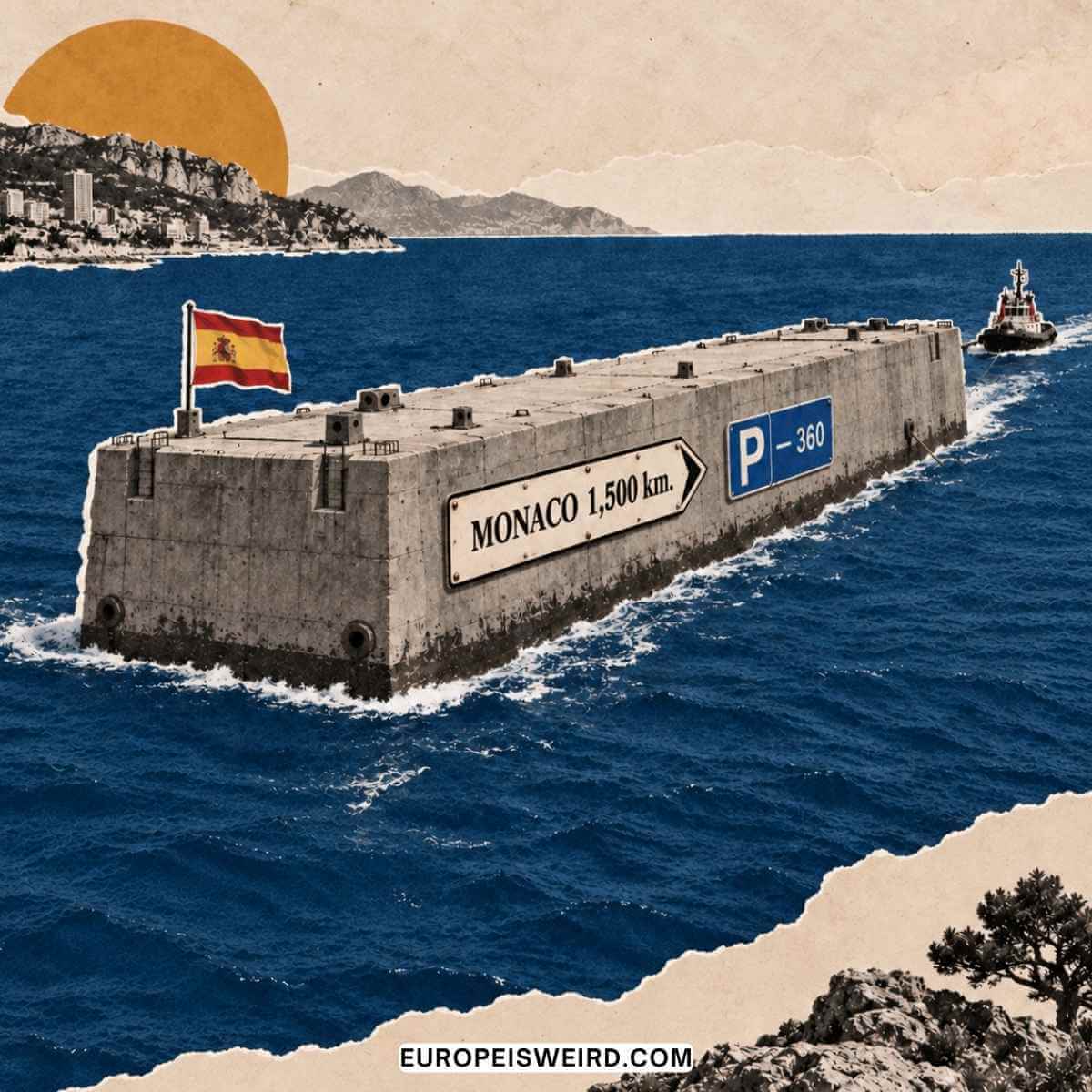
It arrived in August 2002 and was hooked onto the foot of the Rock of Monaco with a giant metal ball joint. The structure is semi-floating, held by the joint at one end and mooring lines out to sea.
It also has a four-level parking garage for 360 cars inside it. When Monaco ran out of room for parking, it had some built in another country and delivered by tugboat.
How do you build Mareterra?
An earlier plan was much more dramatic. Architectural Record reports that Norman Foster was originally tasked with a Dubai-style cluster of artificial islands. That version was abandoned over its environmental impact. Monaco eventually settled for making the existing country slightly larger.
The version that got built stays close to shore, on the underwater shelf. Engineers made 18 hollow concrete caissons in Marseille, each roughly 27 meters tall and weighing 10,000 metric tons before ballasting.
They floated them over, lowered them onto an underwater embankment in a curved line, and filled the space behind them with sand. Monaco’s only land border is with France, and now part of its coastline was made there too.
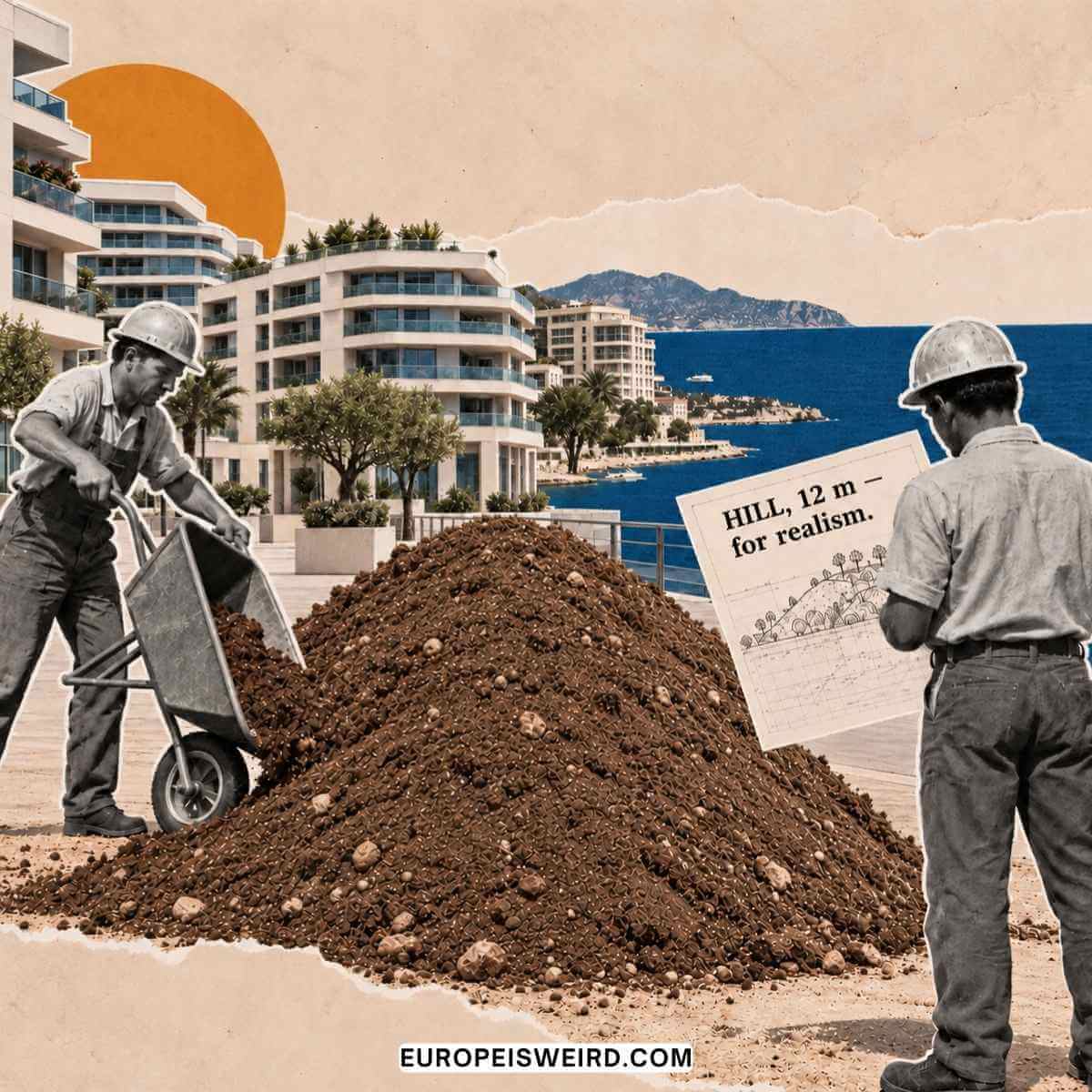
The new ground was in place by 2020. The district opened in December 2024 with villas, townhouses, apartment buildings (one of them by Renzo Piano), a park, a marina, and an artificial hill about 12 meters high, added so the new land wouldn’t look suspiciously flat.
Monaco is so steep that it runs public elevators between streets, and it still went out of its way to build a hill.
What happened to everything that already lived there?
The sea wasn't empty, so Monaco had to move the previous residents out before building on top of them.
The marine specialists at Andromède Océanologie say they transplanted about 500 square meters of protected Posidonia seagrass in 24 days. They lifted the meadow in chunks that kept sediment around the roots and replanted it elsewhere. Their two-year check reported survival of more than 70%.
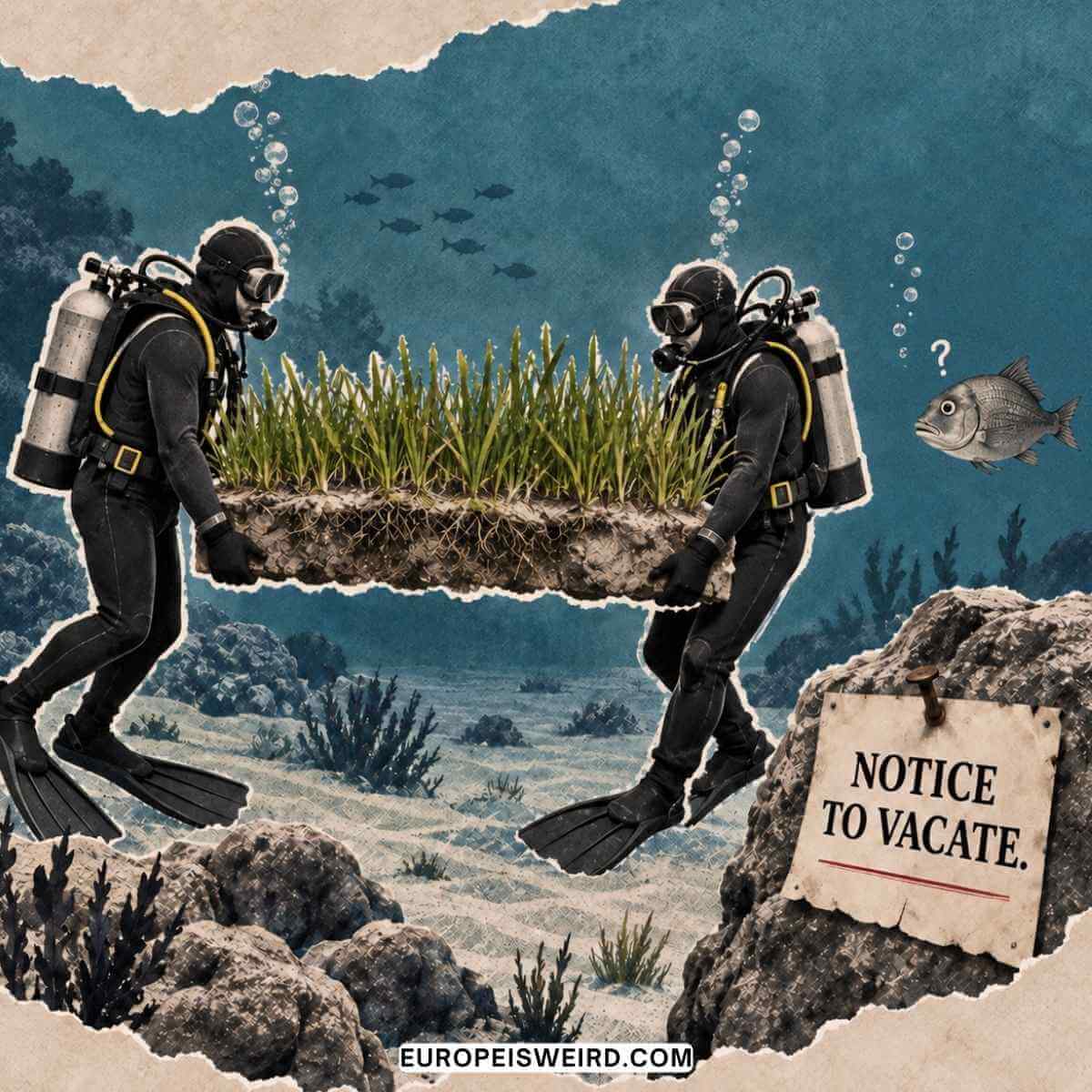
The developers also added artificial reefs and other features intended to help marine life colonize the new coastline.
Fish trapped behind the concrete barrier had to be caught and moved too. Monaco had reached the stage of bringing in fishermen to save the fish.
The floor costs what now?
Mareterra has 110 apartments, ten villas, and four townhouses. Before its 2024 opening, the Financial Times cited estimates of prices as high as €120,000 per square meter.
At that rate, a hypothetical 100-square-meter home would cost €12 million. The single square meter by the front door where you take your shoes off would be a €120,000 purchase on its own.
The €2 billion bill covered the whole development, including making the land and building on it. Private investors financed the project. The state’s side of the deal included public spaces, a concession payment and tax revenue, while the investors got property to sell.
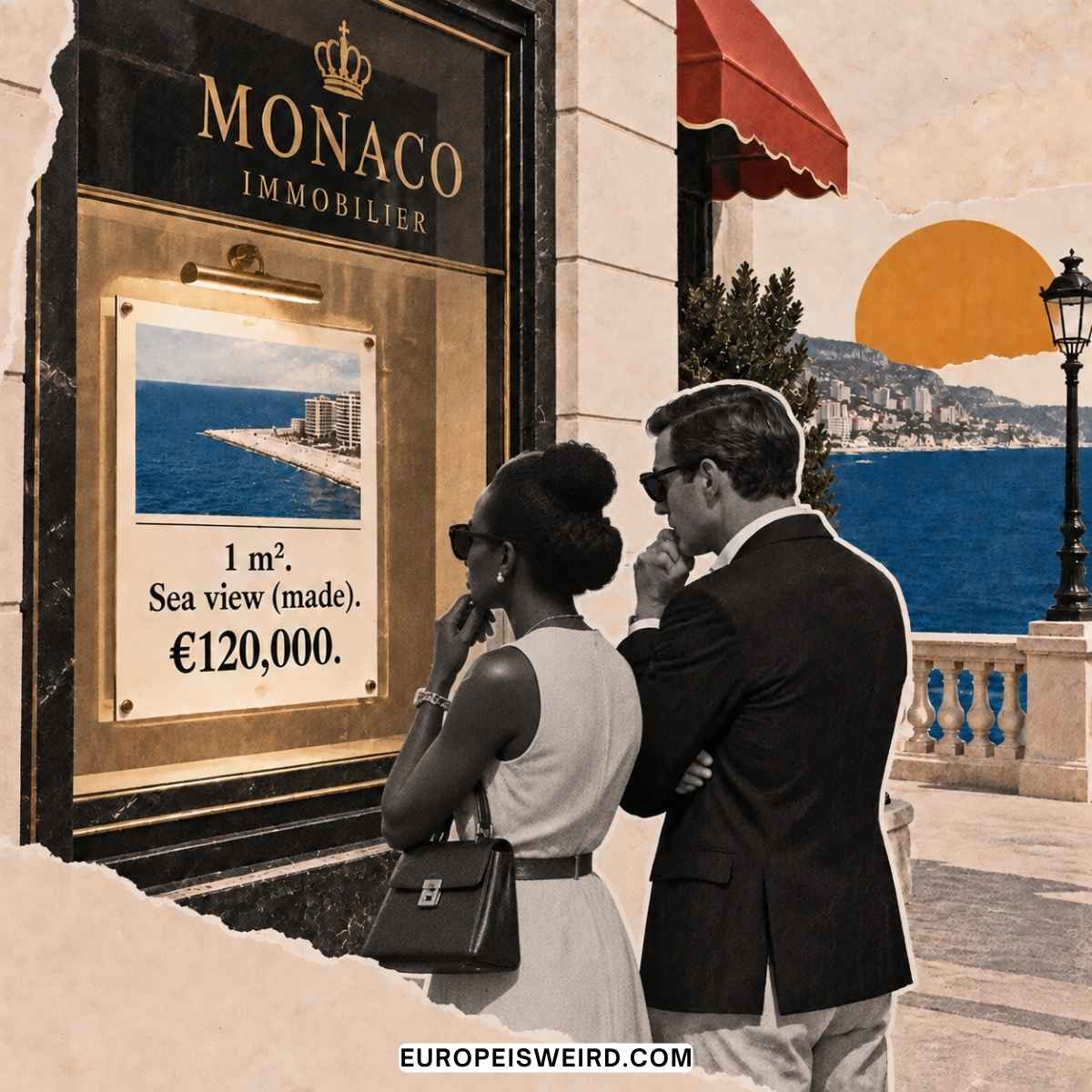
Buyers could get far cheaper property by crossing into France, which in parts of Monaco means crossing the street. But then they’d own an apartment in France, and the thing they’re paying for is a Monaco address. That is how the enormous expense of creating land here starts to look sensible.
Over at Les Jardins d’Eau, one of the residential complexes, the amenity list includes wine rooms, spas, massage rooms, swimming pools, and hair salons. After all that work extending a sovereign state, residents should at least be able to get their hair done.
Then there is Rinat Akhmetov, the Ukrainian billionaire whose company bought a five-story, 21-room apartment of around 2,500 square meters in Le Renzo, the Renzo Piano building, for a reported €471 million.
Bloomberg, which broke the story in April 2026, described it as the most expensive home sale ever recorded. It comes with a private pool, a jacuzzi, and at least eight parking spaces, in a country that once had to get its parking built in Spain.
Is Monaco going to keep doing this?
The limits are real. Monaco’s seabed gets deep fast, and Mareterra is squeezed between two protected marine areas. For another extension, finding the money may turn out to be easier than finding the seabed.
Still, the principality has spent more than a century treating its coastline as something that can be renegotiated. France is still where it was. The Mediterranean keeps having to move.