
Andorra Has Two Heads of State. One is the President of France.
Andorra is a small country in the Pyrenees between France and Spain, known mostly for ski slopes, duty-free shopping, and being the answer to a pub quiz question. About 90,000 people live there, with their own parliament, their own prime minister, and their own seat at the United Nations.
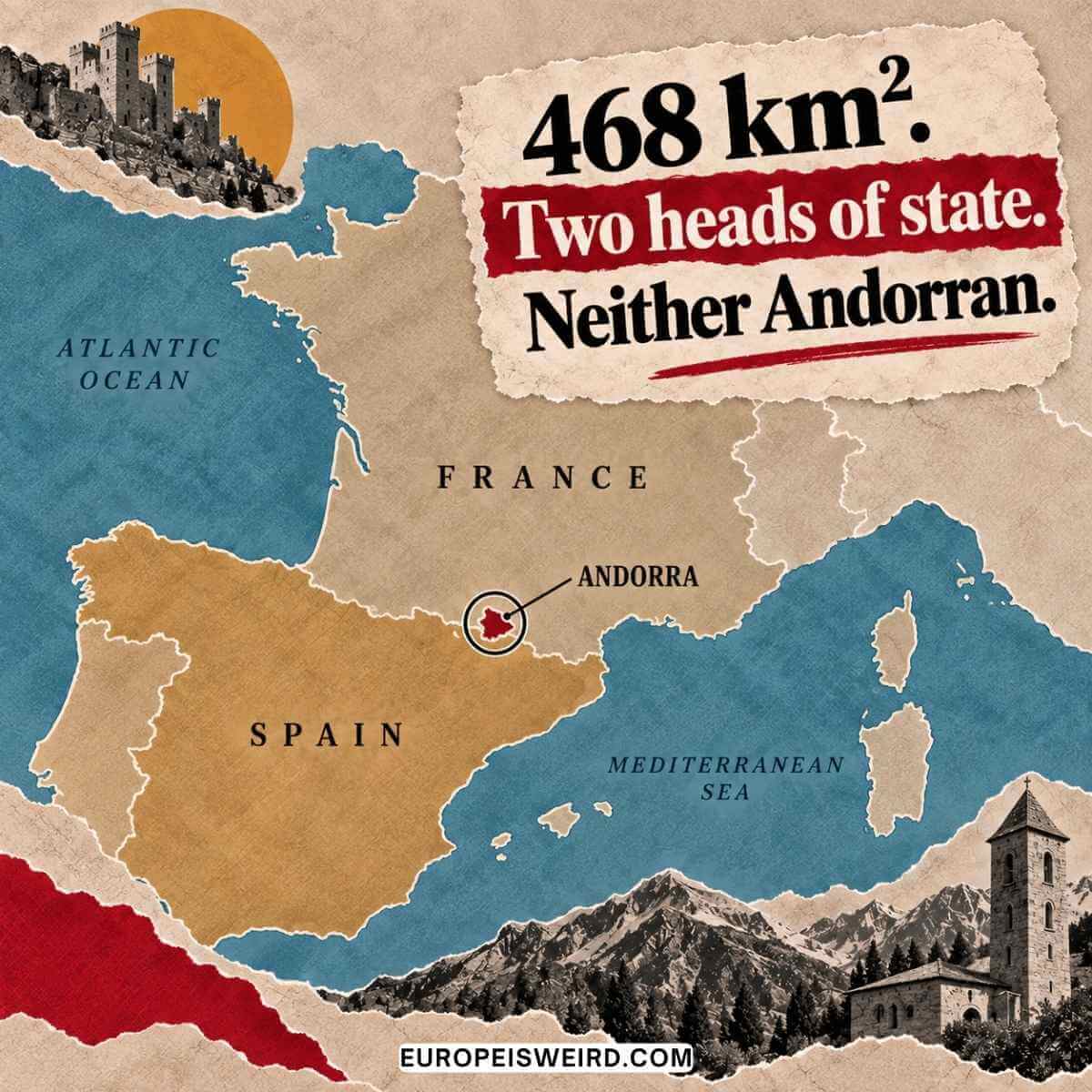
They also have two princes, and neither of them is Andorran. One is a Catholic bishop who lives in Spain. The other is Emmanuel Macron.
Andorrans don't get a vote on either one. The bishop lands the job when the Pope assigns him to the right diocese, and the French president gets it as a bonus for winning an election.
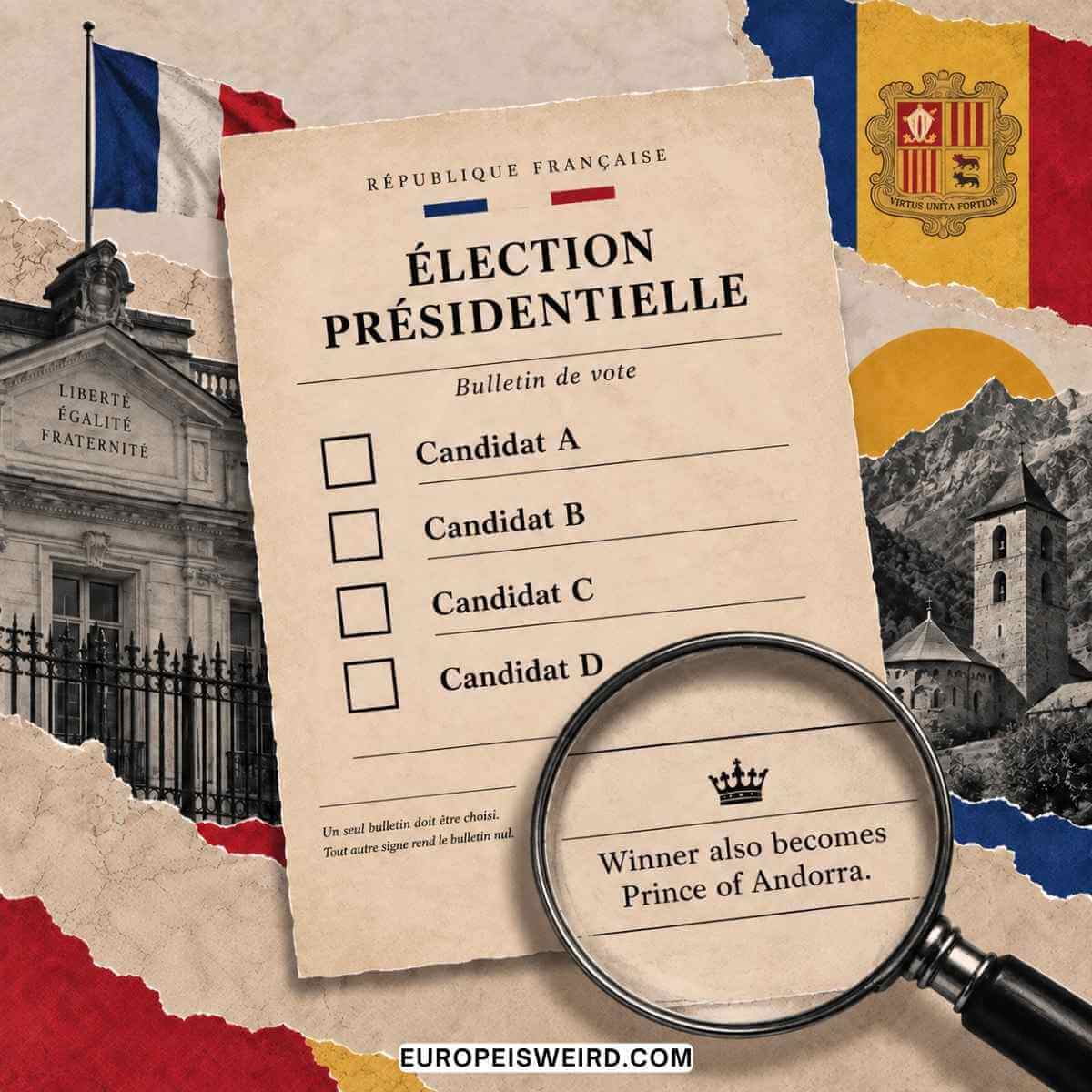
That makes every French presidential race an Andorran royal succession. In 2022, more than 13 million people voted for Marine Le Pen and, whether they knew it or not, came reasonably close to making her a prince of Andorra.
Blame a property dispute from 1278
This whole arrangement exists because two medieval men could not agree on who owned Andorra.
In the 1200s, the Bishop of Urgell and the Count of Foix were fighting over their rights to the Andorran valleys. In 1278, they settled the dispute with a pareatge, an agreement to share power. A second agreement followed in 1288.
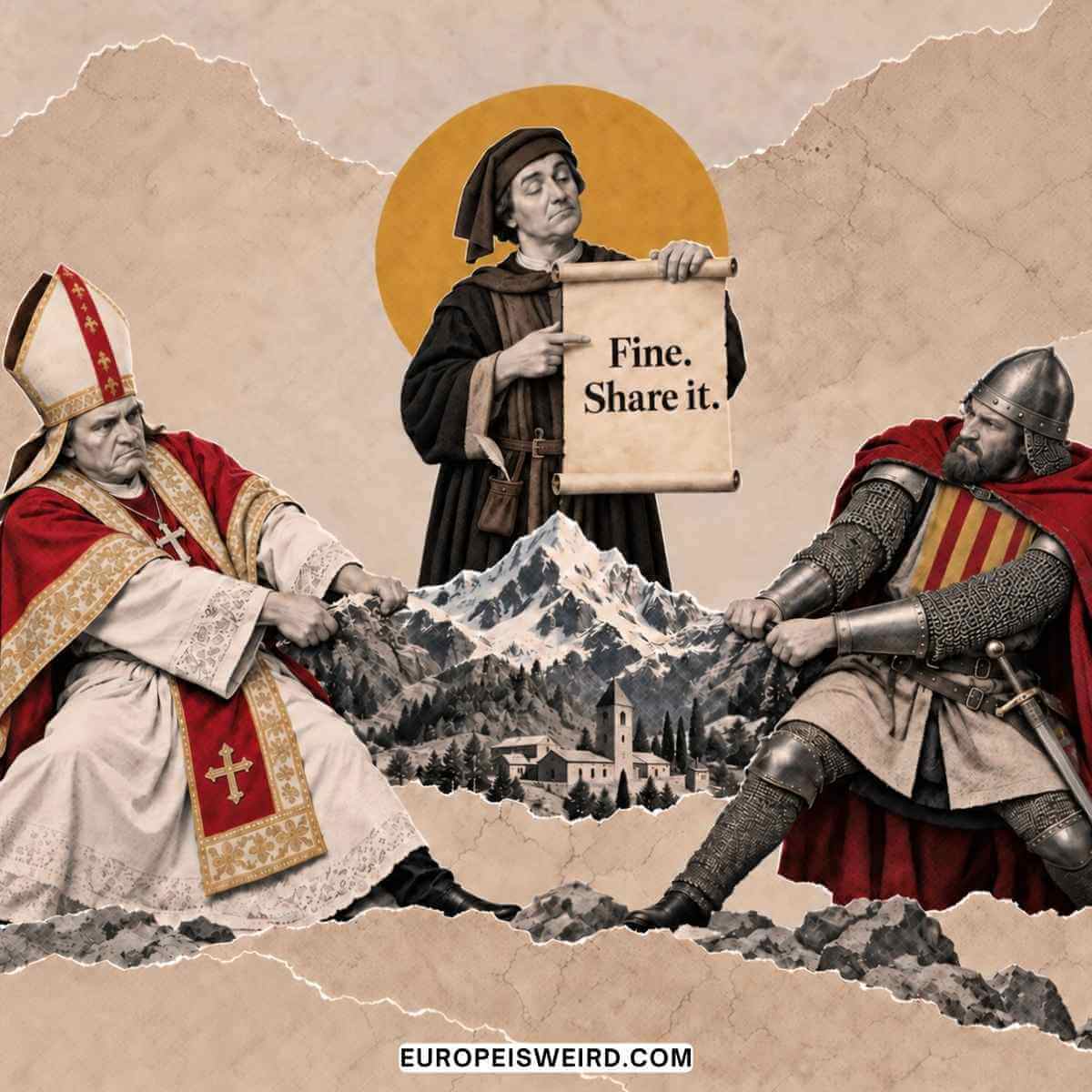
Nearly 750 years later, Andorra is still operating under the basic setup.
The bishop’s half was straightforward. It stayed attached to the diocese of Urgell, based in La Seu d’Urgell, just across the Spanish border. Become bishop, become co-prince.
The count’s half had considerably more plot. It passed through inheritance to the kings of Navarre. Then, in 1589, Henry III of Navarre became Henry IV of France. In 1607, he attached the Andorran co-lordship to the French crown itself.
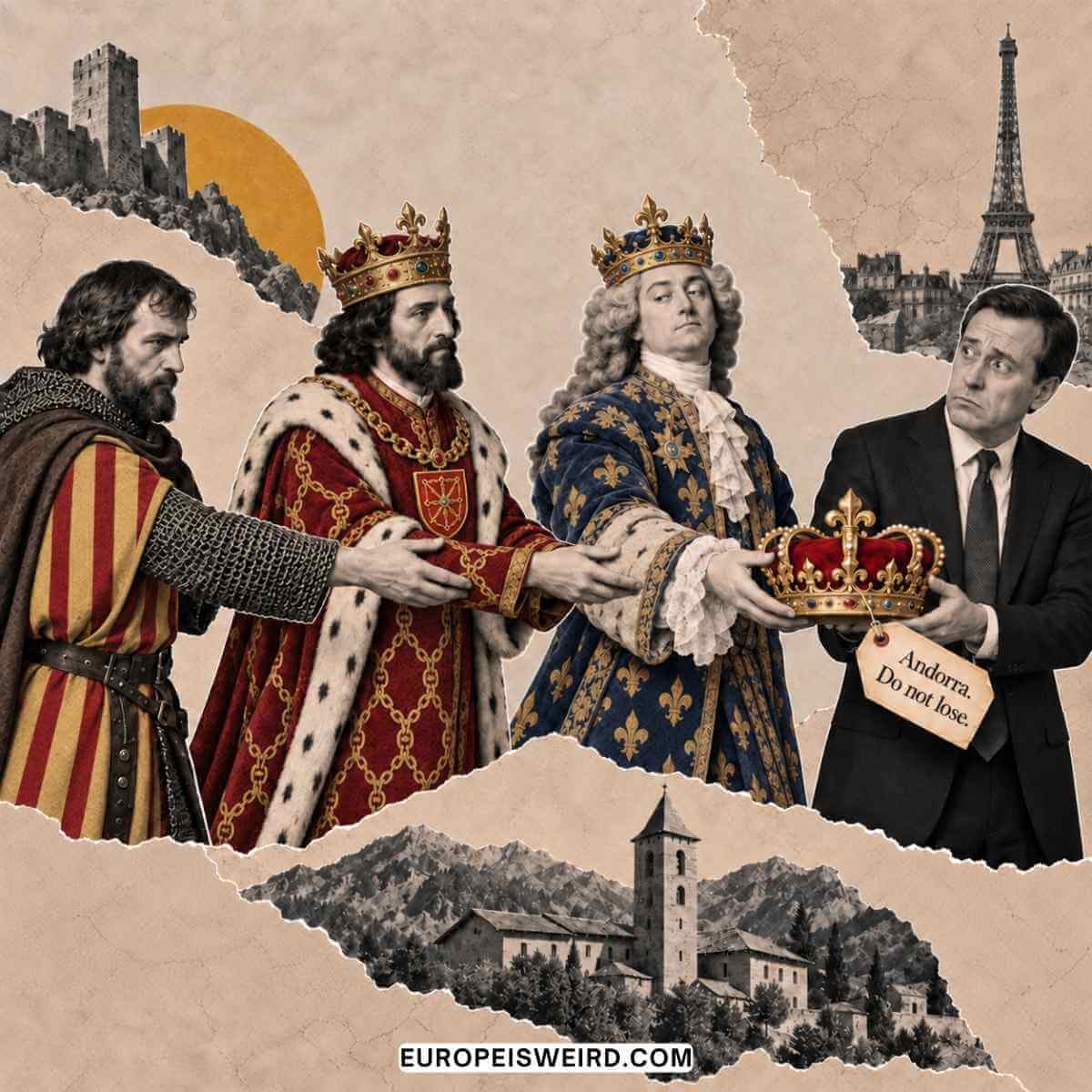
When France later ran out of kings, the title eventually passed to its presidents, which is how Charles de Gaulle, François Mitterrand and Nicolas Sarkozy all ended up as part-time princes of a country about two and a half times the size of Washington, D.C.
The time France quit and Andorra asked for it back
The revolutionaries who guillotined King Louis XVI in January 1793 weren’t about to keep doing his feudal side jobs. That year, the new French Republic refused Andorra’s traditional tribute and renounced its feudal rights over the country.
A tiny mountain nation suddenly free of a foreign overlord might be expected to celebrate. The Andorrans ran the numbers instead.
The old setup had helped protect their autonomy and came with valuable tax and trading privileges. France had left them with one bishop in Spain and several very good reasons to want France back.
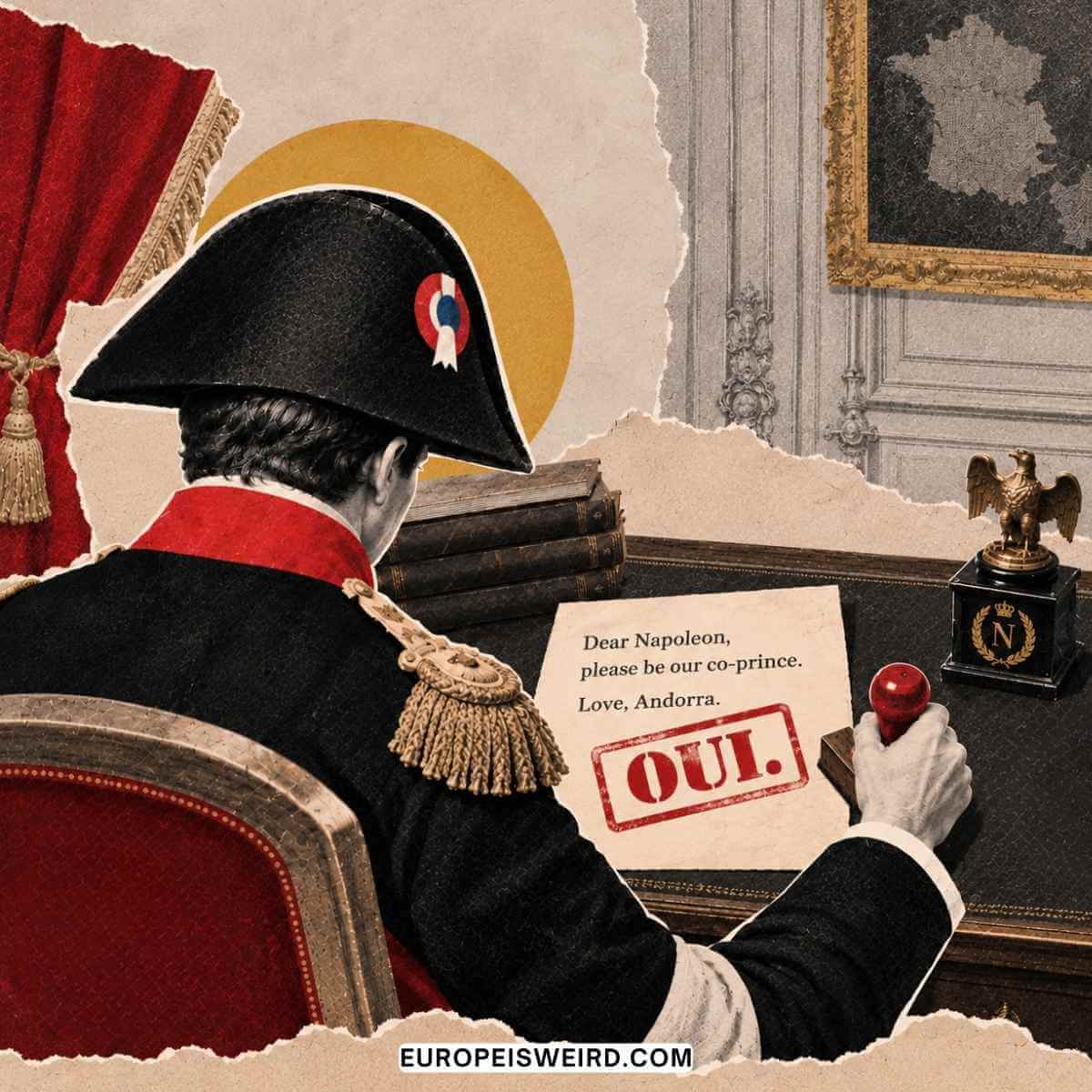
So the Andorrans petitioned Napoleon to please be their co-prince. Napoleon rarely passed up a chance to rule something, and in 1806, he said yes.
Six years later, he annexed them.
In 1812, Napoleon brought Catalonia into his empire and added Andorra too, placing it in a French administrative district called Segre. The Andorrans had asked him to share power with the bishop. He helped himself to the whole country.
After Napoleon’s fall, the two-prince arrangement resumed. The French half passed to the restored kings and eventually to presidents, which is how Macron ended up with a medieval side job of his own.
The rent was paid in ham
For centuries, Andorra paid its two princes a tribute known as the questia. France collected in odd-numbered years. The Bishop of Urgell got even-numbered years, plus the better snacks.
As TIME reported in 1978, the French president’s payment was then worth about $460. The bishop received about $12 in cash, six hams, six cheeses and six chickens.
The questia was finally abolished in 1993, when Andorra adopted its first written constitution and joined the United Nations.
The World Wide Web already existed. Andorra was still settling constitutional business in ham.
The man who made himself King of Andorra
By 1934, Andorra had spent more than 650 years with two princes. With both of them away, Boris Skossyreff saw an opening.
The Russian adventurer had reportedly picked up Andorran citizenship in December 1933. In July 1934, he proclaimed himself Andorra’s sovereign prince, better remembered as King Boris I. He announced a new constitution, declared the General Council dismissed and declared war on the Bishop of Urgell.

His reign didn’t make it to the end of the month. On July 20, Spain’s Guardia Civil arrested him in La Seu d’Urgell, a Spanish town just across the Andorran border, and took him to Barcelona. The bishop never had to raise an army.
A short reign, but plenty for the biography.
So what do the princes actually do?
The 1993 constitution finally turned Andorra into a modern parliamentary democracy. Andorrans elect a parliament, parliament chooses a prime minister, and the prime minister runs the country.
The princes, however, survived the update.
They remain joint heads of state, with a job that is mostly ceremonial: signing laws and treaties, formally appointing the prime minister parliament has already chosen, and carrying out the usual head-of-state duties.
Mostly ceremonial does not mean decorative. The co-princes still have some real powers, including making certain court appointments and referring laws for constitutional review.
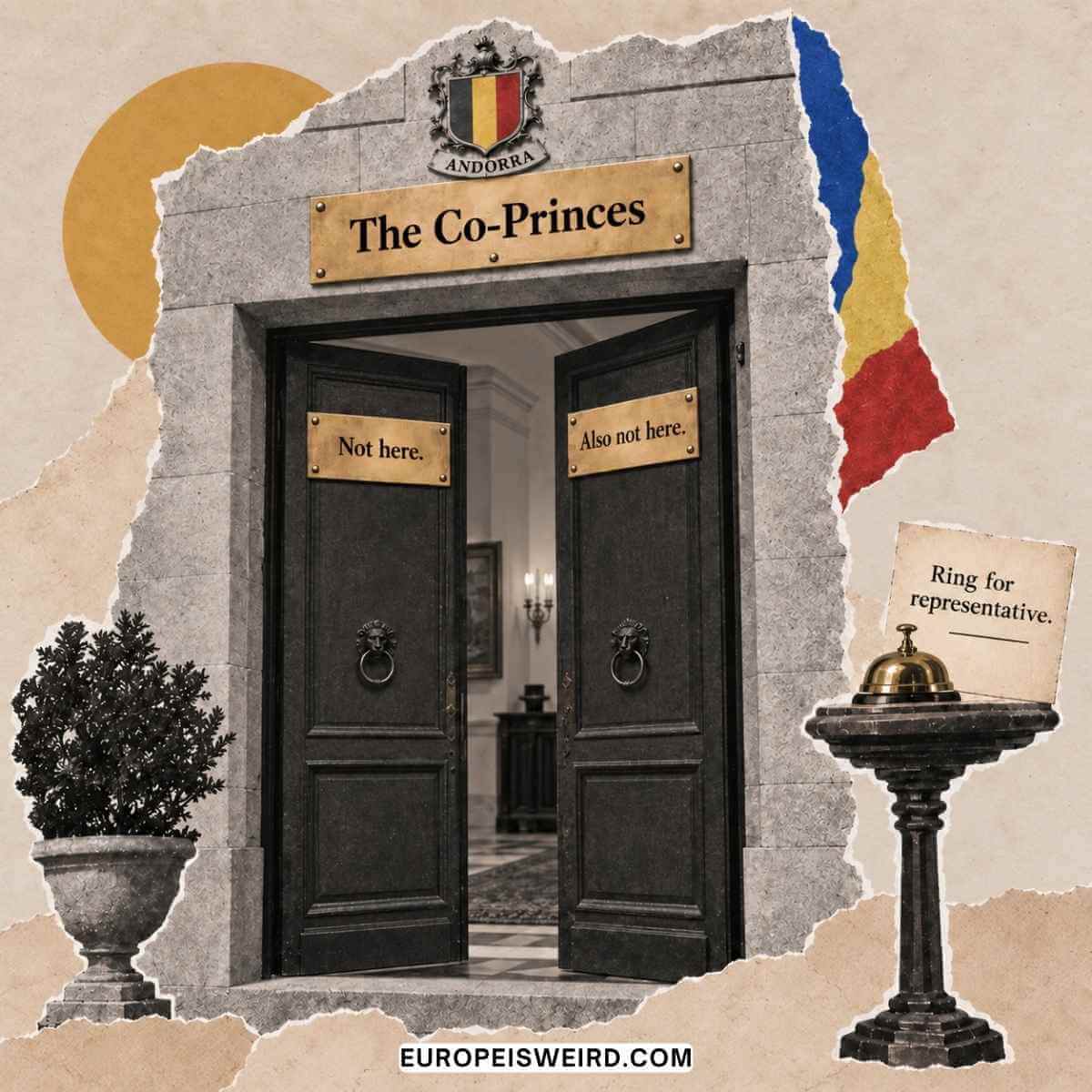
Since neither prince lives in Andorra, each one appoints a personal representative to take care of the day-to-day princing.
The current lineup is Macron, co-prince since 2017, and Bishop Josep-Lluís Serrano Pentinat, a former Vatican diplomat who took over in May 2025.
When he swore his oath to the Andorran constitution that June, the prime minister also handed him an Andorran passport. A practical gift for a head of state who commutes in from Spain.
The prince who threatened to quit
Being half-prince of Andorra is normally the quietest part of a French president's job. Then came 2009.
Andorra was on the OECD’s blacklist of uncooperative tax havens, while Sarkozy was pushing hard against banking secrecy. He told lawmakers from his party that he would give up his title as co-prince if tax havens refused to clean up their act.
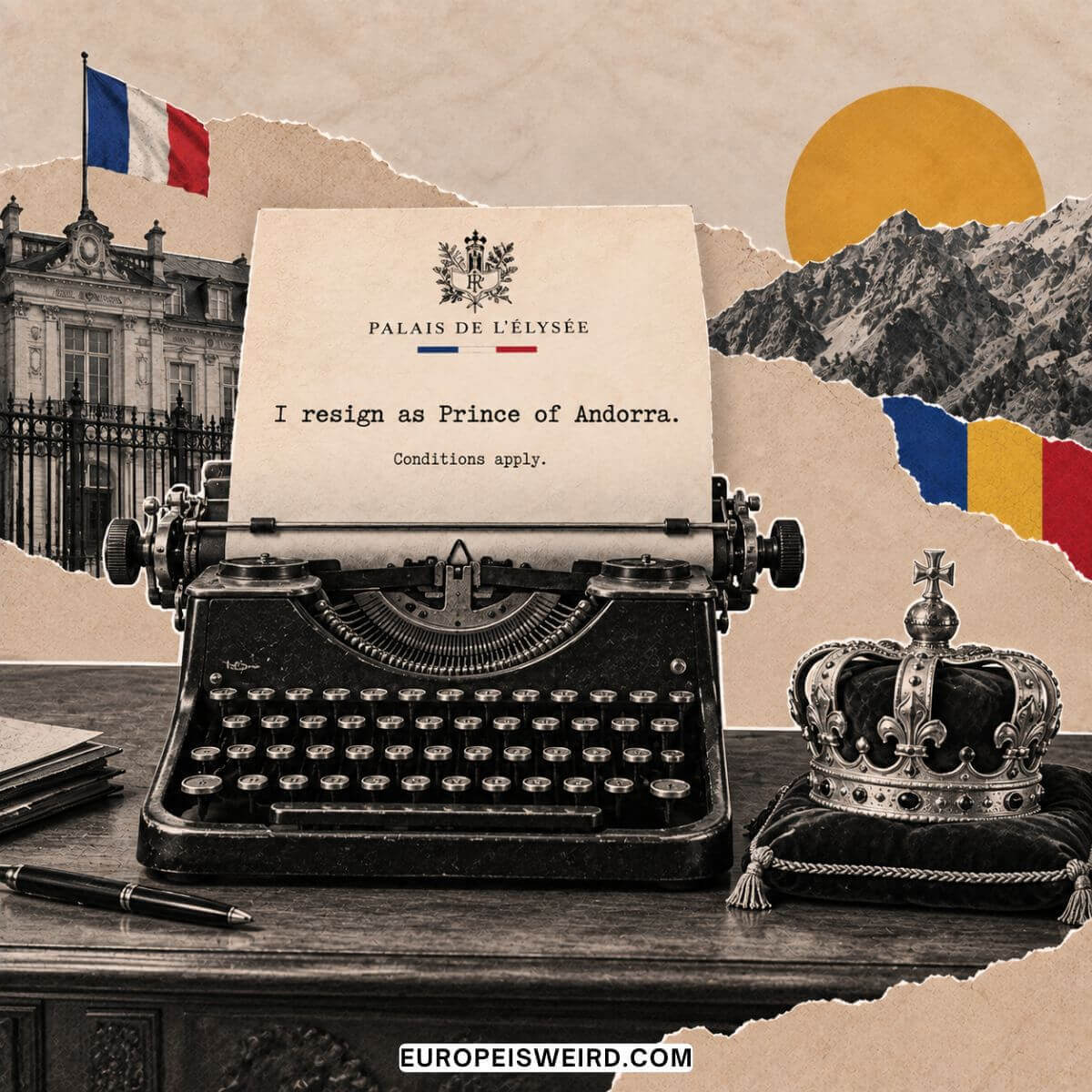
Andorra was already a step ahead of him. About two weeks before the threat, it had signed the Paris Declaration, promising to start sharing tax information with other countries, and that September its parliament passed a law allowing tax information to be exchanged on request.
Sarkozy never resigned. He lost the title in 2012 the usual way, by losing the French election.
Why any of this still matters
Andorra’s two-prince setup sounds like excellent trivia right up until it runs into an actual political problem. Andorra bans abortion in all circumstances, and one of its two heads of state is a Catholic bishop. Suddenly, “mostly ceremonial” is doing a lot of work.
Europe has been here before. In Belgium in 1990, King Baudouin refused to sign a law legalizing abortion. The government responded by declaring him temporarily unable to reign, signing the law without him, then restoring his powers the next day.
Belgium basically switched the king off and back on again.
Andorra’s constitution already allows some laws to take effect with one co-prince’s signature. The bigger problem is what happens if abortion reform causes the bishop to resign altogether.
The government has therefore been negotiating with the Vatican over how far it can change the law without accidentally blowing up a political arrangement that dates back to 1278.
Macron raised the issue during a visit in April 2026. On September 8, Prime Minister Xavier Espot said he wanted reform before the parliamentary term ends. His proposal would stop prosecuting women who have abortions. Performing one inside Andorra would still be illegal.
Espot said he was not waiting for the Vatican to formally approve the bill. He did, however, want enough reassurance that passing it would not cost Andorra one of its princes.
So the likely compromise is very Andorran: the bishop stays, the co-principality survives, and women still have to cross a border for the procedure.
The next prince is on the ballot in 2027
Macron can't run for a third consecutive term, so in spring 2027 France will elect a new president. Whoever wins will also inherit a co-principality, a personal representative in Andorra, and possibly the abortion negotiations with the Vatican.
The bishop, meanwhile, has no election to lose. Church rules ask bishops to offer their resignation at 75, and the pope decides whether to accept it. Serrano is 49. His predecessor, Vives, served alongside four French presidents: Chirac, Sarkozy, Hollande and Macron.
Macron has to leave in 2027. Serrano isn’t even due to hand in his resignation until 2052. And even then, his boss can say no.